Elite DOMYSTIQUE

Weekly writing on the soul of a home

The Sacred Circle

A weekly look at what makes a house a home: the air, the light, the objects and the quiet acts of care.

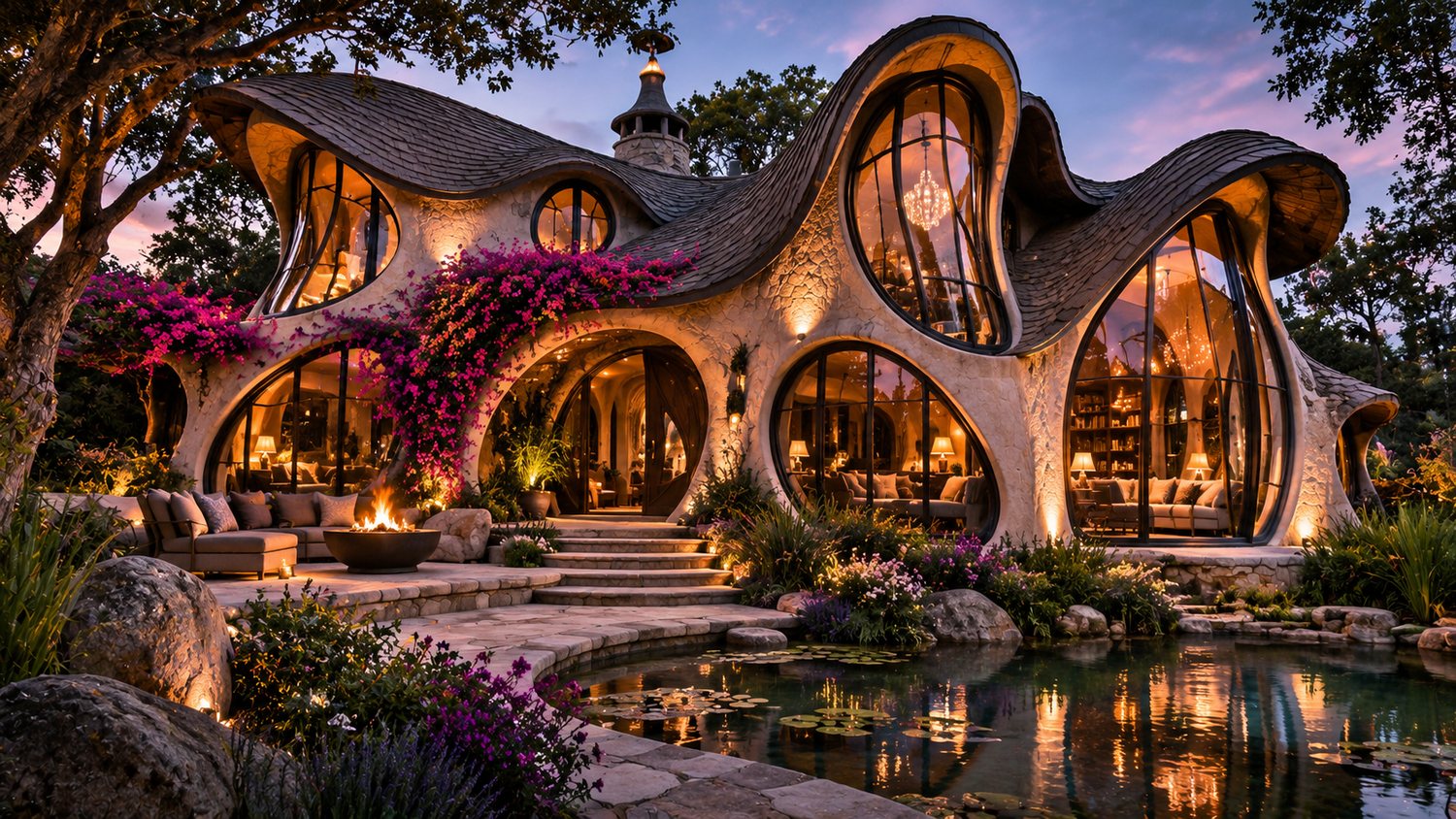
A spherical timber and glass pod suspended in a bamboo forest at sunrise, reached by a rope bridgeA curved cream stone house with glowing arched windows, bougainvillea and a lily pond at twilightRounded white domed villas with glowing windows beside an infinity pool above the sea at sunsetAn angular stone and glass house with a curved arch and a pool under a full moon

Concept imagery

Introduction

The CareBnB Journal

Seeing the familiar world differently

The world we inhabit is made up of more than the places we live, the objects we gather and the landscapes that surround us. It is also shaped by the memories we carry, the dreams we imagine, the relationships we nurture and the ways we care for one another.

At CareBnB, we explore the many dimensions of everyday life through three interconnected landscapes.

01

The physical world

Our homes, architecture, interiors, gardens, landscapes, objects and materials. The places and things that give shape to our daily lives, influence how we feel and create the environments in which we live.

02

The inner landscape

Memory, imagination, emotion, identity, dreams and belonging. The unseen world within us that gives meaning to the places we inhabit and shapes our experience of home.

03

The relational world

Care, hospitality, community, generosity, connection and our relationship with nature. The ways we interact with one another, participate in our communities and understand our place within the wider living world.

These landscapes are not separate. They continually inform and enrich one another. A home is both a physical place and an emotional sanctuary. A garden is both a landscape and an invitation to reconnect with the natural world. Hospitality is both an act of welcome and an expression of how we regard one another.

Through stories, ideas, people, places and thoughtful observations, the CareBnB Journal explores these connections and the possibilities they offer for living more consciously, beautifully and considerately.

We are interested in the familiar things we sometimes overlook, the small details that make life meaningful and the deeper stories hidden within ordinary experiences.

Every CareBnB article should invite the reader to see the familiar world a little differently.

Because sometimes, changing the way we see the world is the beginning of changing the way we live in it.

The soul of a home is a place for philosophy, poetry and musings about everything that leads us to a good life, in right relationship with the Creator.

Every week

Writing about the soul of a home

Each week we will write about the soul of a home: not its floor plan or its finishes, but the feeling you meet when you walk through the door. What makes one house a refuge and another just a building? We think the answer lies in small things, kept well.

Our writing draws on years of looking after homes on the NSW Central Coast, and on a simple belief behind DOMYSTIQUE: a home is made of its air, its water, its light, its surfaces and the care that is given to them every day.

We will write about places and objects, seasons and rituals, and the quiet craft of housekeeping, alongside notes from our collections. Think of it as a weekly walk through the house, with an open door and a pot of tea.

First entry in The Sacred Circle

The Bridge Builders

Participating in the Creation of The Way

A pale stone arched bridge with an octagonal lattice balustrade over a dark, still pond, its reflection forming a full circle, framed by lush green foliage

Photo: Wai Siew on Unsplash

We believe we are living in an extraordinary time of possibility.

A time for bridge builders, visionaries, creators, healers, custodians and community makers to bring forward a different vision for humanity.

Rather than simply criticising the systems and structures that have contributed to disconnection, domination, exploitation and extraction, we are choosing to participate in the creation of something better.

We are bringing our ideas, our creativity, our enterprises and our collective efforts into the world, guided by the teachings and example of Yeshua HaMashiach.

We call this work The Way.

The Way is not simply something we speak about or aspire to follow. It is something we seek to demonstrate through how we live, how we work, how we treat one another and how we organise our communities.

We are mindful of the practices we engage with and the consequences of our decisions. We seek to avoid participation in activities founded upon harm, exploitation, deception or corruption.

Instead, we aspire to build relationships and initiatives founded upon integrity, compassion, reciprocity, transparency, stewardship and mutual responsibility.

We are moving towards a more restorative, connected and community-oriented way of living.

A way that values people over profit, relationships over transactions, regeneration over extraction and cooperation over domination.

A way that recognises the importance of small communities, local enterprise, cultural knowledge, intergenerational wisdom and our relationship with the natural world.

We understand that meaningful change does not happen through declarations alone. It happens when people begin creating practical alternatives.

When we open our homes with genuine hospitality.

When we support local producers and makers.

When we restore gardens, landscapes and ecosystems.

When we create opportunities for women, families and communities to flourish.

When we recognise the dignity of every person and honour the contributions of those whose work often goes unseen.

When we choose to repair rather than discard, reconcile rather than divide, and restore rather than exploit.

This is the work of bridge builders.

We do not claim to have all the answers, nor do we imagine that creating a different world will be without challenges. We recognise that the work requires humility, discernment, courage, accountability and a willingness to continually learn.

At the heart of the Holyword Foundation are three enduring commitments:

RESTORATION.
RECONCILIATION.
RESTITUTION.

These principles guide our aspiration to restore right relationship between people, communities, cultures and the living world.

We are not waiting for a perfect world to arrive.

We are participating in its creation.

Through the teachings of Yeshua HaMashiach, we seek to put love into practice and demonstrate that another way of living, relating and creating is possible.

We are the bridge builders. We are the weavers of connection. We are participants in the creation of The Way.

Together, let us build something worthy of the generations who will follow.

Lady Saffire BoVardia

← Back to The Journal

Second entry in The Sacred Circle

The Importance of Care

The foundation of a more beautiful world

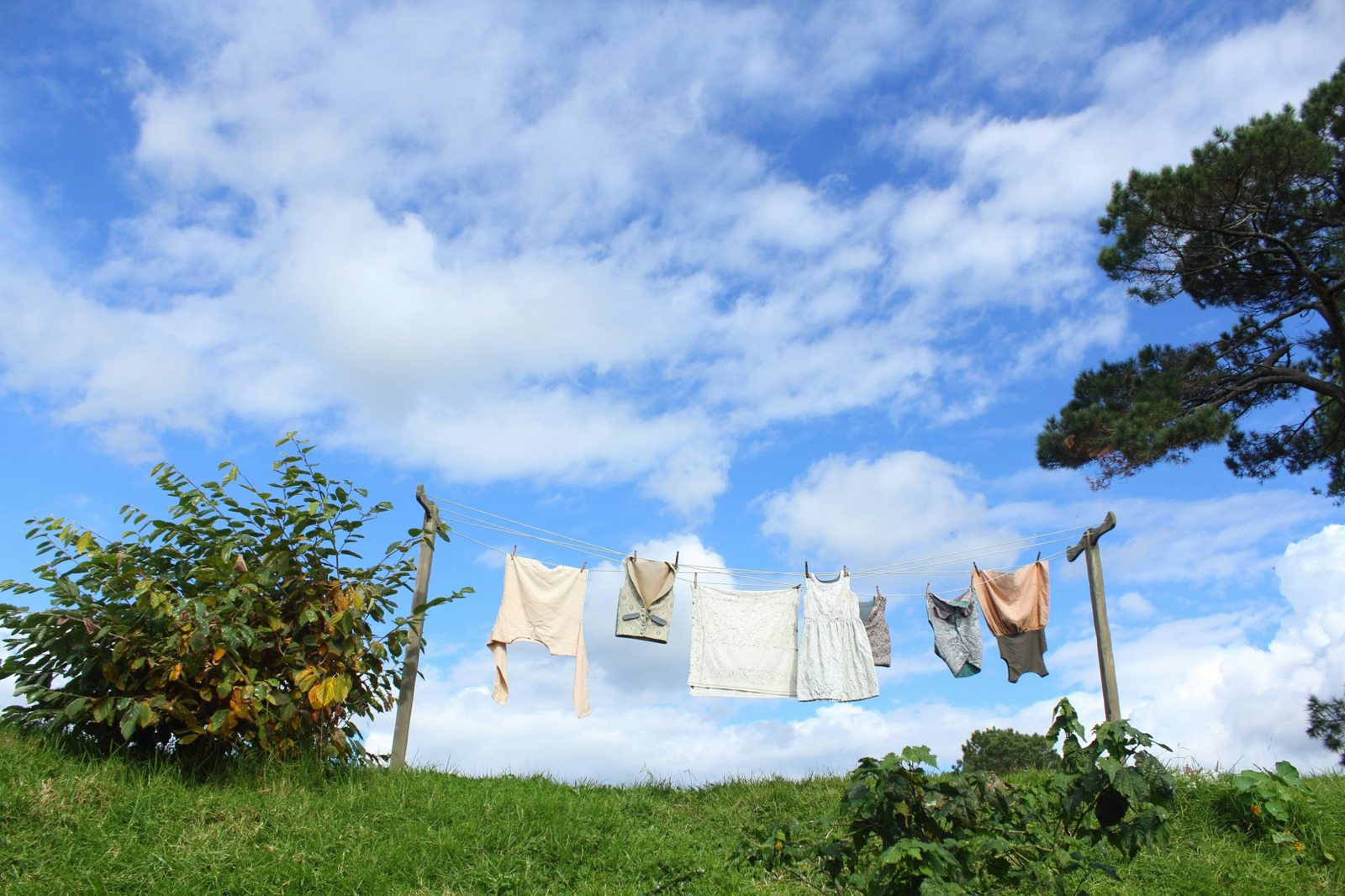
A washing line between two timber posts carrying soft cream, white and pale blue clothes, against a bright blue sky with clouds above a green grassy hill

Photo: Chittima Stanmore on Unsplash

What does it mean to care?

It is a question that deserves considerably more attention than we perhaps give it.

We speak about care in relation to children, families, relationships, health, animals and the environment. We establish institutions, professions and industries dedicated to caring for others. We develop policies, regulations and systems intended to protect people's wellbeing.

And yet, when we look around the world, we might reasonably ask whether we have lost something fundamental in our understanding of what it means to care.

We live in a time of extraordinary technological advancement, material abundance and global connectivity. We can communicate across continents in seconds, purchase almost anything we desire and access services that previous generations could scarcely imagine.

But are we becoming better at caring for one another?

Have we become so accustomed to convenience, consumption and individual self-interest that we have forgotten the importance of consideration, compassion and mutual responsibility?

Perhaps it is time to bring care back to the centre of our conversations about what makes a good society.

Care is an expression of our humanity

To care is to recognise that we are not isolated individuals moving through the world independently of everyone and everything else.

Our lives are interconnected.

The food we eat, the homes we inhabit, the clothes we wear, the services we receive and the communities in which we live are all made possible through the contributions of other people and the natural world.

Every day, we benefit from the labour, knowledge, resources and generosity of countless others, many of whom we will never meet.

Care begins when we recognise this interconnectedness.

It is expressed through the simple act of considering another person's experience.

It is taking the time to listen. It is noticing when someone needs help. It is respecting another person's labour, circumstances and dignity. It is understanding that our actions have consequences beyond ourselves.

Care is not weakness. It is not subservience or an expectation that we should sacrifice our own wellbeing for the benefit of others.

Genuine care includes boundaries, honesty, responsibility and respect.

It is a reciprocal relationship in which the dignity and wellbeing of everyone matters.

The cost of a culture that doesn't care

When care disappears from our relationships and institutions, the consequences are profound.

We see it in the exploitation of workers, the neglect of vulnerable people, the destruction of natural environments, the fragmentation of communities and the growing isolation experienced by individuals.

We see it when profit becomes more important than people, when convenience takes precedence over consideration and when the consequences of our actions are routinely transferred to someone else.

We see it when the person cleaning our accommodation becomes invisible, when the neighbour is treated as an inconvenience, when the natural environment is regarded merely as a resource to be consumed, or when people are valued according to their economic usefulness.

These are not simply isolated failures of behaviour.

They reflect a deeper cultural problem: the diminishing recognition of our responsibility to one another.

A society can have sophisticated systems, extensive regulations and impressive infrastructure while still suffering from a deficit of care.

Because rules can establish minimum standards of behaviour, but they cannot manufacture compassion.

Regulations can impose obligations, but they cannot create a genuine desire to treat another person well.

That must come from somewhere deeper.

It must come from conscience.

Care is something we practise

We often talk about love, compassion and kindness as feelings.

But care becomes meaningful when it is translated into action.

It is found in how we welcome someone into our home, how we treat people who provide services to us, how we conduct our business, how we raise our children and how we respond to the needs of our communities.

It is found in the way we maintain our homes, tend our gardens, care for animals, protect water, respect Country and look after the places we share.

It is also found in the decisions we make about what we purchase, who we support, how we use resources and whether the activities we participate in contribute to wellbeing or harm.

Care asks us to look beyond immediate personal benefit and consider the wider consequences of our choices.

It invites us to become more conscious participants in the world rather than passive consumers of everything it provides.

The Way of Love

For us, the importance of care is deeply connected to the teachings of Yeshua HaMashiach.

His instruction to love our neighbour as ourselves is not simply a spiritual ideal. It is a practical invitation to live differently.

In Matthew 7:12, the Berean Standard Bible records:

"Therefore, whatever you want others to do to you, do also to them, for this is the Law and the Prophets."
Matthew 7:12, Berean Standard Bible

This teaching offers a remarkably simple foundation for human relationships.

Imagine applying it to everything we do.

Imagine businesses that consider the wellbeing of the people who work for them.

Imagine communities that recognise and support their vulnerable members.

Imagine hospitality founded upon genuine welcome and mutual respect.

Imagine an economy in which regeneration and reciprocity are valued alongside financial prosperity.

Imagine people who understand that their freedom carries responsibilities towards others.

This is not about creating a perfect society or expecting everyone to share the same beliefs.

It is about recognising a common humanity and choosing to treat one another accordingly.

The Way of Yeshua invites us to put love into practice through humility, compassion, generosity, service, truth and justice.

Reweaving a culture of care

At the Holyword Foundation, we recognise that generations of domination, control and extraction have contributed to a disconnected world.

We believe that restoration requires more than changing institutions or introducing new policies.

It requires rebuilding relationships.

It requires restoring trust, recognising dignity, honouring contributions and creating opportunities for people to participate in the wellbeing of their communities.

We describe ourselves as knitters and weavers because we believe that a more connected world is created through countless individual acts of care.

Every thoughtful gesture is a thread.

Every restored relationship is a thread.

Every community initiative, restorative project, shared meal, welcoming home and act of generosity adds another thread to the fabric of a more connected world.

This is the spirit behind our three foundational commitments:

RESTORATION.
RECONCILIATION.
RESTITUTION.

Care is the thread that runs through all three.

We cannot restore what has been damaged without caring about what has been lost.

We cannot reconcile what has been divided without caring about one another.

And we cannot make right what has been taken without caring about justice, dignity and responsibility.

Care begins at home

Perhaps the most important place to begin is not in the corridors of power, the boardrooms of corporations or the institutions that govern our lives.

Perhaps it begins in our own homes and communities.

How do we treat the people around us?

Do we recognise the work that makes our comfort possible?

Do we respect the people who serve us?

Do we take responsibility for our surroundings?

Do we make room for generosity, hospitality and connection?

Do we leave places and relationships better than we found them?

These questions are worth asking because the world we experience is, in part, the consequence of the choices we make every day.

A different measure of a beautiful life

At CareBnB, we believe that care should be at the heart of hospitality.

A beautiful home is wonderful, but the way people feel within it matters just as much.

A welcoming host, a considerate guest, a respected housekeeper, a thoughtfully maintained garden and a community that benefits from visitors all contribute to a richer experience.

We believe that the future of hospitality can be about more than accommodation.

It can be about belonging, reciprocity and meaningful human connection.

And perhaps this philosophy extends far beyond hospitality.

What if we began measuring the success of our lives, our businesses and our communities not only by what we accumulate, but by what we contribute?

Not only by what we consume, but by what we regenerate?

Not only by what we receive, but by how generously we give?

Not only by the homes we own, but by the welcome we extend?

Care is not an optional extra in a civilised society. It is one of the foundations upon which a truly flourishing society is built.

A more beautiful world will not be created by people who simply talk about love, compassion and kindness.

It will be created by people who practise them.

One relationship at a time. One home at a time. One community at a time.

That is the work of care.

And that is a way of living worth building together.

Lady Saffire BoVardia

CAREBnB

Hospitality with a human heart.

Part of a wider vision for restoration, reconciliation and restitution through the Holyword Foundation.

← Back to The Journal

Third entry in The Sacred Circle

The Return to the Sacred

Remembering the garden, and the promise of a New Earth

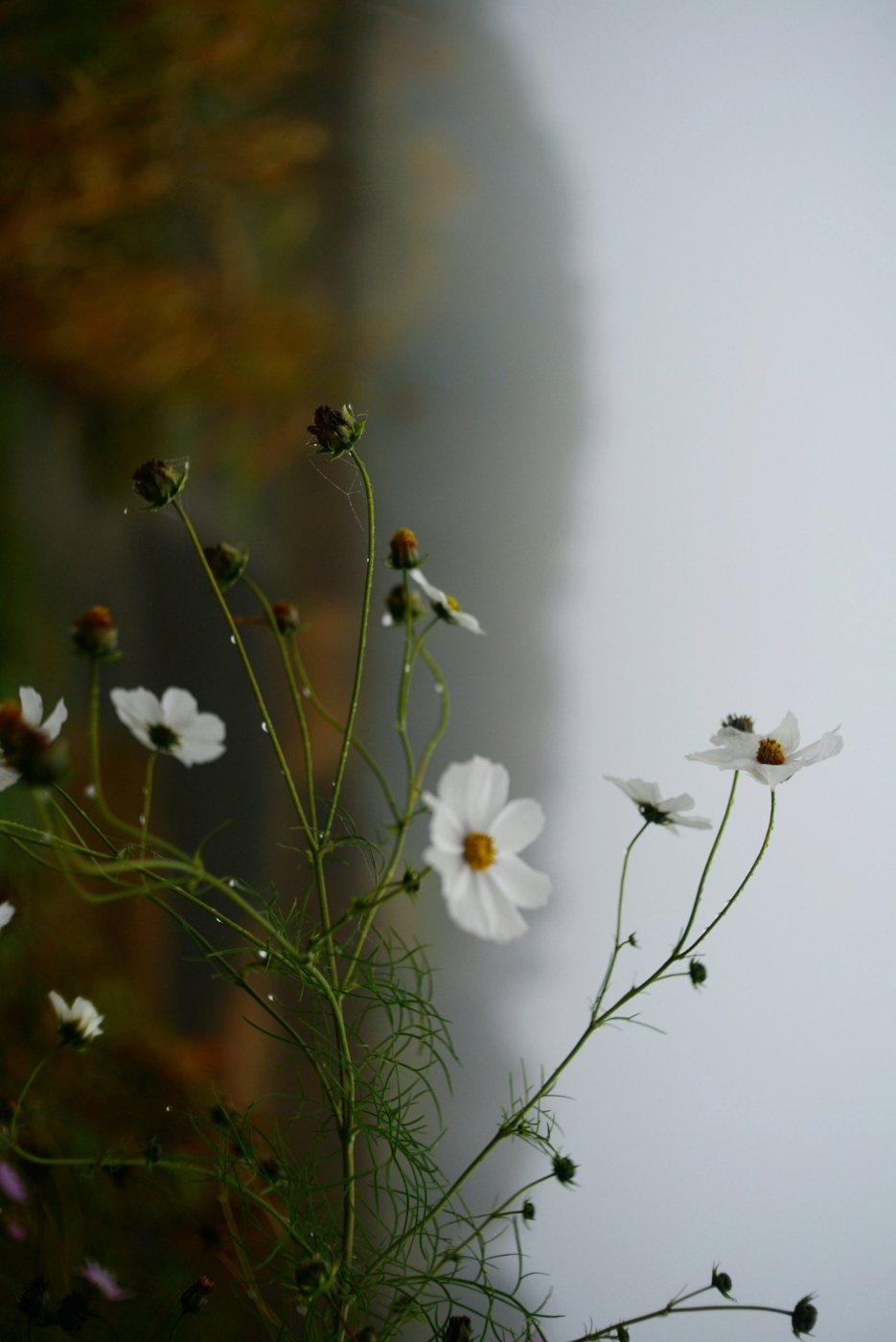
Delicate white cosmos flowers with yellow centres on slender green stems, beaded with water drops, against a soft grey-white mist

Photo: Liana S on Unsplash

There is something deep within the human spirit that longs for a return to the sacred. A longing for a way of living in which we feel connected to the Earth beneath our feet, the sky above us, the natural rhythms of life and the presence of something greater than ourselves.

Perhaps this longing is, in part, a remembering.

The biblical story begins in a garden. In Genesis, humanity is placed within the Garden of Eden, surrounded by the abundance of Creation and entrusted with the responsibility of tending and keeping it. It is a picture of life in relationship: with the Creator, with one another and with the living world. The garden is not simply a beautiful place. It represents a state of belonging, harmony and sacred responsibility.

Yet the story does not end with humanity's departure from Eden.

In the Book of Revelation, we are offered a vision of a New Heaven and a New Earth. It is a vision of renewal, of restoration and of the healing of all that has been wounded. The promise is not simply that humanity will find another place to live, but that the relationship between the Creator and Creation will be made whole again.

Revelation 21:3, gives us these words:

“Behold, the dwelling place of God is with man, and He will live with them. They will be His people, and God Himself will be with them as their God.”

And in Revelation 22, the vision returns us to a garden: the river of the water of life, the tree of life, and the healing of the nations.

It is a remarkable beginning and ending. The garden that appears at the beginning of the human story reappears in the promise of its renewal.

What might it mean to begin living with this vision in our hearts today?

Perhaps the return to the sacred begins in the ordinary places of our lives. In the way we care for a home, tend a garden, prepare a meal, welcome a stranger, honour the land and treat one another with consideration. In the quiet recognition that beauty is not merely something to possess, but something to participate in. That hospitality is not simply providing a place to stay, but offering a genuine expression of welcome. That caring for the natural world is not an optional virtue, but part of our responsibility as participants in Creation.

A sacred life does not necessarily require us to withdraw from the world. It may ask us to become more present within it.

To see the garden as more than landscaping. The home as more than property. The table as more than a place to eat. The guest as more than a booking. The land as more than an asset.

It asks us to reconsider what we value, what we nurture and what we leave behind.

At CareBnB, we believe that the places we inhabit can become expressions of this deeper understanding. Through thoughtful design, respect for nature, meaningful hospitality and a renewed appreciation of the people and places around us, we can begin to cultivate a different relationship with the world.

We do not claim that any home or garden can recreate Eden, or that human effort alone can bring about the New Earth promised in Scripture. But we can choose to live in ways that honour the sacredness of life and reflect the qualities of the world we hope to see restored.

Perhaps the journey home is also a spiritual journey: a remembering of who we are, where we belong and how we are called to live.

The story begins in a garden. And the promise of Revelation brings us back to the garden once more.

May we learn to walk gently upon the Earth, to care for what has been entrusted to us, and to make our homes and communities places where the sacred is welcomed, honoured and remembered.

Lady Saffire BoVardia

← Back to The Journal

Fourth entry in The Sacred Circle

Building a New Civilisation

The return to harmony, resonance and natural order

Consciousness made manifest through the physical world

A sunlit city of tall crystal spires, glass domes and curving terraces among gardens of purple and white flowers, with waterfalls, a winding river and snow-capped mountains at sunrise

Image created with ChatGPT

What if the rebuilding of civilisation begins with sound and frequency?

Before we consider how to redesign our cities, rebuild our economies, transform our institutions or create new systems of governance, perhaps we need to return to a more fundamental question: what are the underlying principles through which life itself is organised?

Creation is full of rhythm, movement, vibration and resonance. From the oscillations of subatomic particles to the movement of celestial bodies, from the beating of a human heart to the cycles of the seasons, the natural world reveals an extraordinary interconnectedness.

Sound is vibration travelling through a medium. Light is electromagnetic radiation. Matter has dynamic physical properties, and living organisms depend upon complex patterns of electrical, chemical and biological communication. Rhythm is fundamental to the functioning of our bodies and the organisation of life.

Across ancient cultures, music, sacred sound, chant and rhythm have also been understood as expressions of the relationship between humanity and the divine. The idea that creation emerges through a creative Word or sound is found in several spiritual traditions, including the opening passages of the Gospel of John.

Perhaps these ancient understandings invite us to consider something important: that harmony is not simply an aesthetic preference. It is a way of understanding relationship.

And perhaps the greatest challenge facing humanity is that we have built a civilisation increasingly disconnected from the very relationships that sustain life.

The problem with the civilisation we have inherited

For generations, the dominant model of civilisation has been organised around expansion, accumulation, competition and the extraction of resources. Success has largely been measured through economic growth, productivity, consumption and the acquisition of material wealth.

We have become extraordinarily sophisticated in our technological achievements, yet our relationship with the natural world has become increasingly strained.

Our homes are often disconnected from their landscapes. Our food systems are separated from the soil and the seasons. Water is treated as a commodity rather than an essential resource upon which all life depends. Our communities are fragmented, our working lives are increasingly disconnected from meaningful contribution, and our understanding of wellbeing is frequently reduced to the management of symptoms rather than the cultivation of health.

We have created environments that can be materially abundant but emotionally impoverished.

We have confused convenience with quality of life, accumulation with prosperity and economic growth with human progress.

The question is whether we can imagine something fundamentally different.

What if the next evolution of civilisation is not about producing more, consuming more or controlling more, but about restoring our capacity to live in harmony with ourselves, one another and the natural world?

What if we began to measure prosperity through the health of our people, the fertility of our soils, the purity of our waters, the resilience of our communities and the quality of our relationships?

This would require more than a change of policy or technology. It would require an evolution in consciousness.

And that evolution must become visible in the way we physically show up in the world.

Consciousness made manifest

The Holyword Foundation is committed to supporting and developing projects that evolve human consciousness through practical expressions of a new way of living.

We are interested in the relationship between what we believe and what we create.

If we speak of harmony, how does that influence the homes we build?

If we speak of reverence for creation, how does that influence the way we treat the land and water?

If we speak of reciprocity, how does that influence our economic relationships?

If we speak of the sacred, how does that become evident in our everyday lives?

We believe that a new civilisation cannot be built simply by changing the language of the old one. It requires a different set of organising principles, reflected in our environments, our relationships, our cultural expressions and our systems of exchange.

This is consciousness made manifest through the physical world.

It is the understanding that the way we build, grow, nourish, work, create and care is inseparable from the kind of world we are collectively bringing into existence.

The resonant home: beginning where we live

The home is perhaps the most immediate expression of our relationship with the world.

It is where we sleep, eat, restore ourselves, raise children, nurture relationships and create memories. It is the physical environment in which much of our inner landscape is formed.

Yet the design of many contemporary homes gives insufficient consideration to the relationship between the human body, the surrounding landscape and the natural environment.

A different approach begins by listening.

We listen to the land before we build upon it. We consider the orientation of the sun, prevailing winds, the movement of water, the existing vegetation, the contours of the landscape and the local climate.

We design around natural light, ventilation, thermal comfort, healthy materials, proportion and acoustics. We consider how spaces feel to inhabit, how sound moves through them, how materials age and how a building can exist in a more harmonious relationship with its surroundings.

A resonant home is not necessarily an expensive home. It is not defined by luxury finishes or fashionable architectural statements.

It is a home that supports life.

It provides shelter, safety, beauty, nourishment, restoration and belonging. It is designed with an understanding that our physical surroundings influence our experiences, our health and our relationships.

The resonant home is also connected to the land beyond its walls.

It has gardens that produce food and medicine, spaces that encourage biodiversity, and systems that respect the natural movement and conservation of water.

It understands that a home is not an isolated object. It is part of a larger ecological and human network.

The garden: returning to the intelligence of nature

The garden is one of the most beautiful expressions of a civilisation organised around natural order.

It reconnects us with the fundamental cycles of life: planting, growing, flowering, harvesting, decay and renewal.

A productive garden is more than a source of food. It is a living classroom in which we learn about soil, microorganisms, pollination, water, sunlight, biodiversity and the extraordinary relationships that sustain ecosystems.

Medicine gardens reconnect us with botanical knowledge and the traditional uses of plants. Food forests demonstrate how nourishment can be cultivated through layered, interconnected systems. Regenerative gardening restores soil health and encourages the return of biodiversity.

Gardens also offer something less easily measured but equally important: a relationship with time.

Nature does not operate according to the urgency of our commercial calendars. It has its own rhythms and seasons. It teaches patience, observation, humility and reciprocity.

We plant because we understand that nourishment is a relationship between generations. We care for the soil today because we understand that others will depend upon it tomorrow.

This is the principle of stewardship.

Water: honouring the source of life

No civilisation can exist without water.

Yet the modern world has often treated water as an industrial input, a commercial asset or an inexhaustible convenience.

A new civilisation must restore our understanding of water as fundamental to the health of every living system.

This means protecting rivers, wetlands, aquifers, springs and watersheds. It means understanding the relationship between healthy soils, vegetation, rainfall and the movement of water through landscapes.

It means designing homes and communities that conserve water, capture rainfall where appropriate, minimise pollution and respect the ecological systems upon which water quality depends.

It also means restoring cultural reverence for water.

For many Traditional Custodians, water carries profound cultural, ecological and spiritual significance. Their knowledge and continuing relationships with Country have much to teach us about responsibility, continuity and care.

We must approach this knowledge with respect, recognising the authority of Traditional Custodians over their own cultural knowledge and the importance of genuine relationships and consent.

Water connects everything. It moves through landscapes, ecosystems, bodies and communities.

To care for water is to care for life.

Resonance and the human experience

If we are interested in building a civilisation around harmony, we must also consider the human being.

Our bodies are rhythmic biological systems. The heart beats, the lungs breathe, the brain produces electrical activity, and our circadian rhythms respond to cycles of light and darkness.

Sound and music can influence mood, attention, relaxation and emotional experience. Research into music therapy, auditory perception and the nervous system offers valuable opportunities to understand these relationships.

We also know that our surroundings matter. Natural light, fresh air, meaningful social connection, movement, access to nature and a sense of safety all contribute to human wellbeing.

This suggests that a new approach to health must look beyond the individual body and consider the environments and relationships within which people live.

We can create places that encourage restoration rather than constant stimulation. We can make room for music, silence, contemplation, movement, creativity and meaningful connection.

We can recognise the importance of emotional wellbeing, spiritual life and belonging alongside physical health.

This is not about claiming that every illness can be cured through frequency or vibration. It is about recognising that human wellbeing is multidimensional and that the environments we create can either support or undermine it.

Reciprocity: the foundations of a different economy

A civilisation built around harmony requires a different understanding of economics.

The prevailing economic model frequently rewards competition, extraction and accumulation, while overlooking the enormous contribution of unpaid care, community knowledge, domestic work, ecological restoration and intergenerational responsibility.

Yet these activities are essential to the functioning of a healthy society.

A different economy begins by recognising that value is created through relationships and contribution.

It encourages local production, independent enterprise, shared resources, meaningful employment, practical skills and cooperation between people with different capacities and gifts.

It recognises that hospitality, domestic care, food production, craftsmanship, education, creative expression and environmental stewardship are all meaningful contributions to collective wellbeing.

Reciprocity does not mean that everything must be exchanged without money. It means that financial exchange operates within a broader understanding of mutual responsibility and shared prosperity.

A healthy community is one in which people are not valued solely according to their purchasing power or economic productivity.

They are valued because they belong, because they contribute and because their lives matter.

This is how we begin to restore the social fabric.

Beauty, culture and the restoration of meaning

Beauty has a place in this conversation that deserves greater recognition.

In a civilisation focused predominantly on productivity and efficiency, beauty is often treated as an indulgence.

But beauty influences how we experience the world. It can invite contemplation, awaken imagination, restore dignity and create a sense of connection.

Architecture, music, art, film, gardens, craftsmanship, food and the domestic arts are not peripheral to civilisation. They are among the ways through which a culture expresses what it values.

A new civilisation must make room for beauty and creative expression.

It must support the storytellers, artists, makers, musicians, gardeners, builders and craftspeople who help us imagine and create a different world.

It must also restore the value of domestic life: the art of making a home, preparing nourishing food, welcoming others, caring for children, honouring elders and creating environments in which people can flourish.

These are not lesser activities. They are foundational cultural practices.

Restoring right relationship

Harmony does not mean uniformity.

An orchestra requires different instruments, different tones and different expressions. Its beauty emerges through the relationship between them.

The same principle can inform our understanding of human society.

A healthy civilisation makes room for difference while recognising our shared responsibility to one another.

It requires the restoration of healthy relationships between the masculine and feminine, between generations, between individuals and communities, and between humanity and the natural world.

It recognises that equality and dignity are essential, while also allowing people to honour the different gifts, experiences and contributions they bring to collective life.

It encourages cooperation without demanding conformity, and individual freedom without abandoning responsibility.

It is a civilisation in which care is not relegated to the margins or expected to be carried invisibly by a few. Care becomes a recognised organising principle of community life.

The sacred foundation: returning to the Garden

Ultimately, our exploration of harmony and natural order leads us back to the sacred.

The opening chapters of Genesis describe a creation brought into being through the spoken Word of YaHUah. Humanity is placed within the Garden and given responsibility to cultivate and care for it.

The Garden is more than a beautiful landscape. It represents a relationship between humanity, creation and the divine.

In John 1:1–3, the Word is described as being present in the beginning, with all things coming into being through it.

And in Revelation 21:1–3, John describes a new heaven and a new earth, declaring that the dwelling place of YaHUah is now among humanity.

These passages offer a profound spiritual vision: creation, relationship and restoration.

The New Earth is not simply a technological upgrade or a more efficient version of the civilisation we already know. It represents a renewal of the relationship between humanity and the sacred source of life.

Perhaps the invitation is to begin living in accordance with that vision now.

To move away from domination and towards stewardship. From extraction towards reciprocity. From separation towards communion. From the pursuit of material abundance alone towards a richer understanding of what it means to live well.

A civilisation we can begin building now

The Holyword Foundation approaches this work as a living commitment.

We are not waiting for governments, institutions or global systems to tell us how a better world should look.

We are interested in the practical work of creating it.

Through the projects we support and develop, we seek to demonstrate that another way of living is possible.

We create and care for homes that respond to their landscapes. We cultivate gardens that produce nourishment and medicine. We honour water and protect the natural systems that sustain life. We support creative expression, meaningful work and the circulation of skills, resources and knowledge. We bring people together through cooperation, reciprocity and care.

We understand that these activities are interconnected expressions of one larger philosophy.

Our ambition is not simply to establish a collection of successful projects. It is to contribute to the evolution of a culture in which the sacred is no longer separated from everyday life.

Where the sacred is present in the way we build, grow, cook, create, work, welcome, share and care.

Where the home becomes a sanctuary, the garden becomes a place of nourishment, the community becomes an extended family of mutual responsibility, and the natural world is treated with the reverence it deserves.

We believe the restoration of civilisation begins when our inner understanding is reflected in our outer actions.

We cannot build a harmonious world while continuing to organise our lives around the principles that created the disharmony.

We must learn to listen again.

To the land. To the waters. To the seasons. To the wisdom of the body. To the music of creation. To one another. And, above all, to YaHUah.

Perhaps the New Earth is not somewhere we must travel to.

Perhaps it is a way of living we must learn to embody.

We are not waiting for a new world to arrive. We are beginning to build it, one home, one garden, one relationship and one act of care at a time.

This is the New Earth made tangible. This is consciousness made manifest. This is the beginning of a civilisation built upon harmony, resonance, reciprocity and love.

Lady Saffire BoVardia

← Back to The Journal

Fifth entry in The Sacred Circle

Poetics of Space

The Architecture of Memory, Imagination and Belonging

Reflections on the relationship between the spaces we inhabit and the lives we lead.

A cluster of glowing amber glass globe pendant lights hanging against dark timber slats

Photo: Matt Seymour on Unsplash

One of the great philosophers who has profoundly influenced the way I understand the world is the French phenomenological philosopher and literary critic, Gaston Bachelard (1884–1962).

His seminal work, The Poetics of Space, first published in 1957, opened up an entirely different way of thinking about architecture, interiors and our relationship with the places we call home.

Bachelard invites us to look beyond the physical dimensions of a house and consider something far more intimate: the emotional, psychological and imaginative life that unfolds within it.

His work resonated deeply with me because I have long felt that our relationship with space extends well beyond aesthetics or functionality. The places we inhabit become part of our identity. They hold our memories, influence our emotions, shape our imagination and contribute to our sense of belonging.

For Bachelard, the house is our first universe. It is the place in which we begin to understand the world, establish our relationship with ourselves and develop our earliest sense of security and identity.

I find this a particularly beautiful way of understanding the significance of home.

The House as an Inner Universe

Bachelard explores the extraordinary relationship between our physical surroundings and our psychological lives. He suggests that the places we inhabit are not passive backgrounds to our existence. They participate in the formation of our memories, our imagination and our sense of self.

The home becomes a vessel for our experiences.

It holds the evidence of our lives: the books we collect, the objects we cherish, the photographs we display, the furniture we inherit and the gardens we tend. Each carries a story, sometimes consciously remembered, sometimes quietly embedded in the fabric of our everyday existence.

Our relationship with these objects is rarely just functional. A well-worn chair might remind us of someone we have loved. An old wooden table might carry the memory of generations gathered around it. A particular scent might transport us to a childhood home we have not seen for decades.

This is the poetry of domestic life.

It is the understanding that the meaning of a home cannot be measured by its architectural merit or monetary value alone. Its true significance lies in the life that has unfolded within it.

The Architecture of Memory

One of Bachelard's most compelling observations concerns the way our memories attach themselves to particular spaces.

He explores the symbolism of the attic and the cellar, the corner, the drawer, the wardrobe and the nest. These seemingly ordinary features of domestic architecture become rich territories of psychological and imaginative experience.

The attic often represents our relationship with thought, clarity and the mysteries of the upper world. The cellar draws us towards the unconscious, the unknown and those parts of ourselves that remain unexplored.

Corners offer retreat. Drawers and wardrobes conceal private treasures. Nests and shells speak to our longing for protection, intimacy and belonging.

These are not simply architectural features. They are expressions of the human imagination.

We all have places in which we feel most ourselves. Spaces where we can retreat from the demands of the outside world, gather our thoughts, dream, remember and simply be.

Perhaps this is why certain homes stay with us long after we have left them. Their physical dimensions may fade from memory, but the feelings they created remain.

The Art of Caring for a Space

If our homes are repositories of memory and imagination, then caring for them becomes something much more meaningful than maintaining appearances.

It becomes an act of respect.

The way we care for a home influences how it feels to inhabit. The quality of light, the freshness of the air, the choice of materials, the arrangement of objects, the presence of natural elements and the attention given to the smallest details all contribute to the emotional experience of a space.

There is a particular kind of intelligence in understanding what a home needs.

Sometimes it requires simplicity. Sometimes warmth. Sometimes the removal of accumulated objects that no longer serve the life being lived. Sometimes it requires nothing more than opening the windows, allowing the light to enter and reconnecting the interior with the natural world beyond it.

The intention is not to create an immaculate showroom or impose an aesthetic upon someone else's life.

It is to create an environment in which life can unfold with greater ease, beauty and dignity.

This is where the art of domestic care becomes inseparable from the art of living.

A thoughtfully maintained home communicates something to the people who inhabit it. It says that their comfort matters, that their surroundings deserve attention and that the ordinary rituals of daily life are worthy of care.

The Inner and Outer Landscapes

At Domystique, I am interested in the relationship between the physical world and the inner landscape of human experience.

We work with houses, architecture, interiors, gardens, landscapes, objects and materials. Yet I recognise that these physical environments are intimately connected to something less visible: memory, imagination, emotion, identity, dreams and belonging.

A home is simultaneously a physical structure and an emotional landscape.

The two cannot be entirely separated.

Architecture gives us the physical conditions in which to live, but it is our experiences, relationships and memories that give those spaces their meaning.

This is why I am drawn to homes with a particular architectural sensibility, homes that respond to their landscape, acknowledge their natural surroundings and invite a more considered relationship with the environment.

There is a quiet beauty in architecture that does not seek to dominate its setting. Homes that sit gently within the landscape, embrace natural light, work with the seasons and allow the surrounding environment to become part of the experience of living.

Such places remind us that we are not separate from nature. We are participants in it.

The Poetry of Domestic Life

Perhaps the most important contribution of Bachelard's philosophy is the invitation to reconsider the ordinary.

The morning light falling across a kitchen floor. The sound of rain on a roof. The smell of fresh linen. A garden coming into flower. The familiar arrangement of objects that quietly tells the story of a life.

These moments rarely announce themselves as significant. Yet they are the very substance of our experience of home.

In a world increasingly organised around speed, productivity and consumption, there is something deeply restorative about paying attention to the spaces we inhabit.

To slow down. To notice. To care.

To recognise that beauty is not necessarily found in extravagance, but often in the thoughtful relationship between things.

A home does not need to be grand to be extraordinary. It needs to feel considered, connected and alive.

Domystique — The Art of Caring for Spaces

My understanding of Domystique is informed by this philosophy.

I believe that caring for a home is an expression of care for the people who live within it.

It is an understanding that the physical environment influences our experience of wellbeing, that beauty can nurture the spirit and that order, cleanliness and thoughtful attention can create the conditions for a more peaceful and harmonious life.

Our work is concerned with more than the presentation of a property. It is about understanding the character of a place, respecting its architectural integrity, preserving its stories and ensuring that its environment continues to support the people who inhabit it.

Whether caring for a significant architectural residence, preparing a home for discerning guests or attending to the quiet details of everyday domestic life, I approach each space with an understanding that it deserves to be treated with respect.

There is an art to knowing what to preserve, what to restore, what to remove and what to leave untouched.

And there is a particular kind of satisfaction in knowing that a space has been cared for with genuine attention.

Bachelard reminds us that a house is never merely a collection of rooms. It is a world within a world, an intimate geography of memory, imagination and belonging.

At Domystique, I find this a beautiful way to understand our work.

For ultimately, the spaces we inhabit become part of who we are.

To care for a home is, in a very real sense, to care for the life unfolding within it.

And perhaps this is the true poetry of space.

Domystique

Lady Saffire BoVardia

← Back to The Journal

Sixth entry in The Sacred Circle

Sovereignty Has Never Been Ceded

What Does It Mean to Belong to a Land That Was Never Surrendered?

An exploration of Australia's unfinished story of sovereignty, Country, truth and reconciliation.

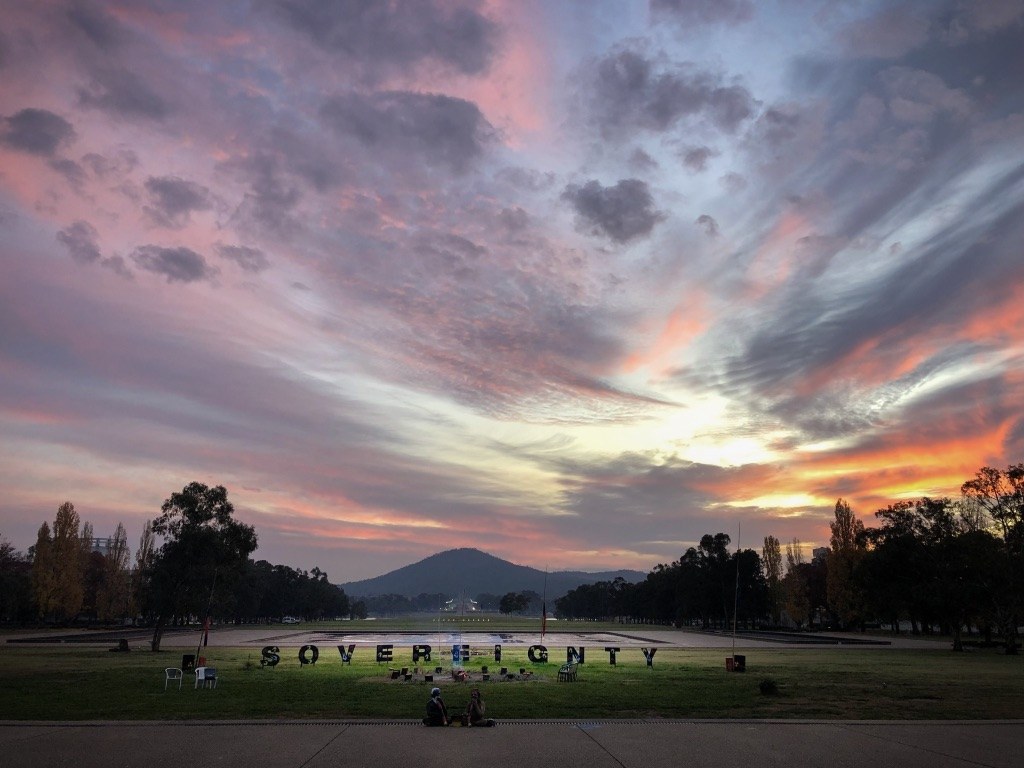
A pink, orange and blue sunrise sky over a park lawn where large black letters spell the word SOVEREIGNTY, with two people sitting nearby and a hill in the distance

Photo: Lady Saffire BoVardia

There is a sentence that has become increasingly important in conversations about Australia's history, identity and future:

Sovereignty was never ceded.

It is a statement that deserves more than a passing acknowledgement. It asks us to reconsider the foundations upon which modern Australia was established, the relationship between people and land, and the responsibilities we inherit as inhabitants of this ancient continent.

To understand what it means, we must first understand what sovereignty actually represents.

Sovereignty is generally understood as the authority to govern, determine laws, make decisions and exercise responsibility over a territory and its people. But for Australia's First Peoples, the relationship with sovereignty reaches far beyond the conventional political definition.

For Aboriginal and Torres Strait Islander peoples, sovereignty is inseparable from Country.

Country is not simply land or property. It encompasses the living natural world, waterways, skies, plants, animals, ancestors, spiritual relationships, cultural knowledge, law and the responsibilities that connect generations.

It is a relationship of belonging, custodianship and obligation that has existed for tens of thousands of years.

A Country Without a Treaty

When the British Crown asserted sovereignty over the eastern seaboard of Australia in 1788, it did so without negotiating a treaty with the hundreds of distinct Aboriginal nations whose laws, cultures and relationships with Country already existed.

There was no general treaty of surrender.

No comprehensive agreement was reached through which First Peoples formally transferred their sovereignty, relinquished their ancestral responsibilities or consented to the establishment of British authority over their territories.

The doctrine of terra nullius — the notion that the land belonged to nobody in a way recognised by British law — provided the legal justification for British colonisation.

Yet the continent was neither empty nor without law.

It was home to sophisticated systems of governance, kinship, diplomacy, trade, cultural practice and ecological stewardship.

The absence of a treaty did not mean an absence of law, authority or civilisation.

It meant that the authority and legal systems of the First Peoples were not recognised by the colonising power.

This is one of the fundamental unresolved questions in Australia's national story.

What Did Mabo Change?

In 1992, the High Court of Australia delivered a landmark decision in Mabo v Queensland (No 2).

The decision overturned the legal doctrine of terra nullius as it had been applied to the recognition of land rights and established that native title could survive the assertion of British sovereignty where the relevant traditional laws and customs continued to be observed and the title had not been extinguished.

It was a profound moment in Australian history.

For the first time, the Australian common law formally recognised that Indigenous peoples had possessed rights and interests in their lands before British colonisation.

The decision helped pave the way for the Native Title Act 1993.

But there is an important distinction.

Mabo did not overturn the Crown's acquisition of sovereignty, nor did it recognise a separate continuing Indigenous sovereignty within Australian domestic law.

The High Court treated the acquisition of sovereignty as an act of state beyond its jurisdiction to adjudicate.

So while native title became legally recognisable, the deeper question of sovereignty remained unresolved.

This distinction matters because land rights and sovereignty are not interchangeable.

The recognition of rights to land does not necessarily resolve questions about political authority, self-determination, the legitimacy of colonisation or the relationship between First Peoples and the Australian state.

Sovereignty and the Meaning of Country

Perhaps the greatest challenge for contemporary Australia is that we have inherited very different understandings of our relationship with land.

The dominant Western system has historically understood land through ownership, boundaries, property titles, development rights and economic value.

Many Aboriginal and Torres Strait Islander knowledge systems understand Country through relationship, responsibility, ancestry, cultural law and continuity.

These are not simply different ways of describing the same thing.

They represent fundamentally different philosophical understandings of what it means to belong to a place.

If we begin to understand land as something we have responsibilities towards, rather than simply something we possess, our relationship with the natural world changes.

We begin to ask different questions.

Are we caring for the land?

Are we protecting its waterways and ecosystems?

Are we respecting the knowledge of those who have maintained relationships with Country across generations?

Are we making decisions that consider the wellbeing of future generations?

These questions are relevant to every Australian, regardless of ancestry.

The Unfinished Conversation

Australia has made significant progress in acknowledging its history, but recognition is not the same as reconciliation.

The 1967 referendum, the Mabo decision, native title legislation and the Bringing Them Home report represent important chapters in the ongoing conversation about justice, recognition and the relationship between First Peoples and the Australian nation.

Yet the question of sovereignty remains unresolved, and Australia has no comprehensive national treaty with its First Peoples.

There are many different perspectives among Aboriginal and Torres Strait Islander communities about how sovereignty, self-determination, treaty-making and recognition should be addressed. These conversations deserve to be explored with care, without assuming that one position represents every First Nation.

I intend to explore some of these contemporary questions, including the Uluru Statement from the Heart, in a separate essay.

For now, I want to return to the more fundamental question:

What does it mean to live on a land whose First Peoples never formally surrendered their ancestral relationship with Country?

What responsibilities does that understanding place upon us?

Truth requires us to acknowledge what happened.

Reconciliation requires us to rebuild relationships.

Restitution requires us to consider what can be repaired, returned or made right.

These are not merely political ideas. They are questions of human conscience.

What Does This Mean for the Future?

I believe the statement that sovereignty was never ceded invites us to consider a much larger question:

What would Australia look like if we began to understand our relationship with this land through responsibility rather than possession?

What if the measure of our success was not simply economic growth, property ownership or the accumulation of wealth, but the health of our ecosystems, the strength of our communities and the wellbeing of generations yet to come?

What if we understood that our relationship with Country carries obligations that extend beyond our individual lifetimes?

There is much we can learn from the ancient knowledge systems of Australia's First Peoples, particularly the understanding that human beings are part of a living world and that our survival depends upon maintaining relationships of reciprocity and respect.

But this knowledge must be approached with humility. It belongs to particular peoples, nations and custodians, and genuine engagement requires listening, consent and respect for cultural authority.

Reconciliation cannot mean simply adopting another culture's wisdom while overlooking the rights and voices of the people who hold it.

It must involve genuine relationship.

A Different Kind of Sovereignty

Perhaps there is also an opportunity to reconsider sovereignty itself.

Beyond the authority of governments and institutions, there is the question of personal sovereignty: our responsibility to act with integrity, exercise conscience, respect the dignity of others and understand the consequences of our decisions.

This does not replace the political and legal questions of Indigenous sovereignty. Rather, it invites us to examine the responsibilities that accompany our own participation in the life of this country.

We cannot build a future founded upon justice while refusing to acknowledge the foundations of our past.

Nor can we claim to care for the Earth while treating the people whose ancestral relationships with Country have endured for millennia as an afterthought.

An Invitation to Reconciliation

For me, the question of sovereignty ultimately returns to something much more fundamental: our relationship with one another and with the living Earth.

If we aspire to walk with the Divine again in the Garden of Eden Restored, then we must learn to live in right relationship with all creation.

We cannot speak of restoration while ignoring dispossession.

We cannot speak of reconciliation without truth.

And we cannot speak of restitution without a willingness to examine what has been taken, what has been damaged and what might be made right.

The Holyword Foundation believes that Restoration, Reconciliation and Restitution are not separate ambitions. They are interconnected responsibilities in the work of creating a more just, compassionate and sustainable world.

We acknowledge the enduring connection of Aboriginal and Torres Strait Islander peoples to their ancestral lands and waters, their continuing cultures, laws and responsibilities to Country.

We recognise that sovereignty was never formally ceded through a treaty with the British Crown.

We do not presume to speak for First Peoples, determine their future or claim authority over their cultural inheritance.

Instead, we believe our responsibility begins with listening, learning, respecting and finding meaningful ways to contribute to a future founded upon dignity, justice and mutual respect.

Perhaps the most important question is not simply who owns this land, but how we might learn to care for it together.

A nation cannot reconcile with a history it refuses to acknowledge. And a people cannot build a just future without first finding the courage to tell the truth about its past.

The work of reconciliation belongs to all of us.

Further reading & historical references

For those wishing to explore the history and legal foundations of this subject further:

  • Mabo v Queensland (No 2) (1992) — The landmark High Court judgment recognising native title and rejecting terra nullius.
  • Native Title Act 1993 — Commonwealth legislation establishing a framework for recognising and protecting native title.
  • The 1967 Referendum — The constitutional referendum concerning Aboriginal and Torres Strait Islander peoples and Commonwealth legislative powers.
  • Bringing Them Home Report (1997) — The national inquiry into the separation of Aboriginal and Torres Strait Islander children from their families.

The Holyword Foundation

RESTORATION. RECONCILIATION. RESTITUTION.

In service to truth, justice, Divine Love and the restoration of right relationship.

Lady Saffire BoVardia

← Back to The Journal

Seventh entry in The Sacred Circle

The Architecture of Humility

On integrity, ego, power, consciousness and the nature of alignment

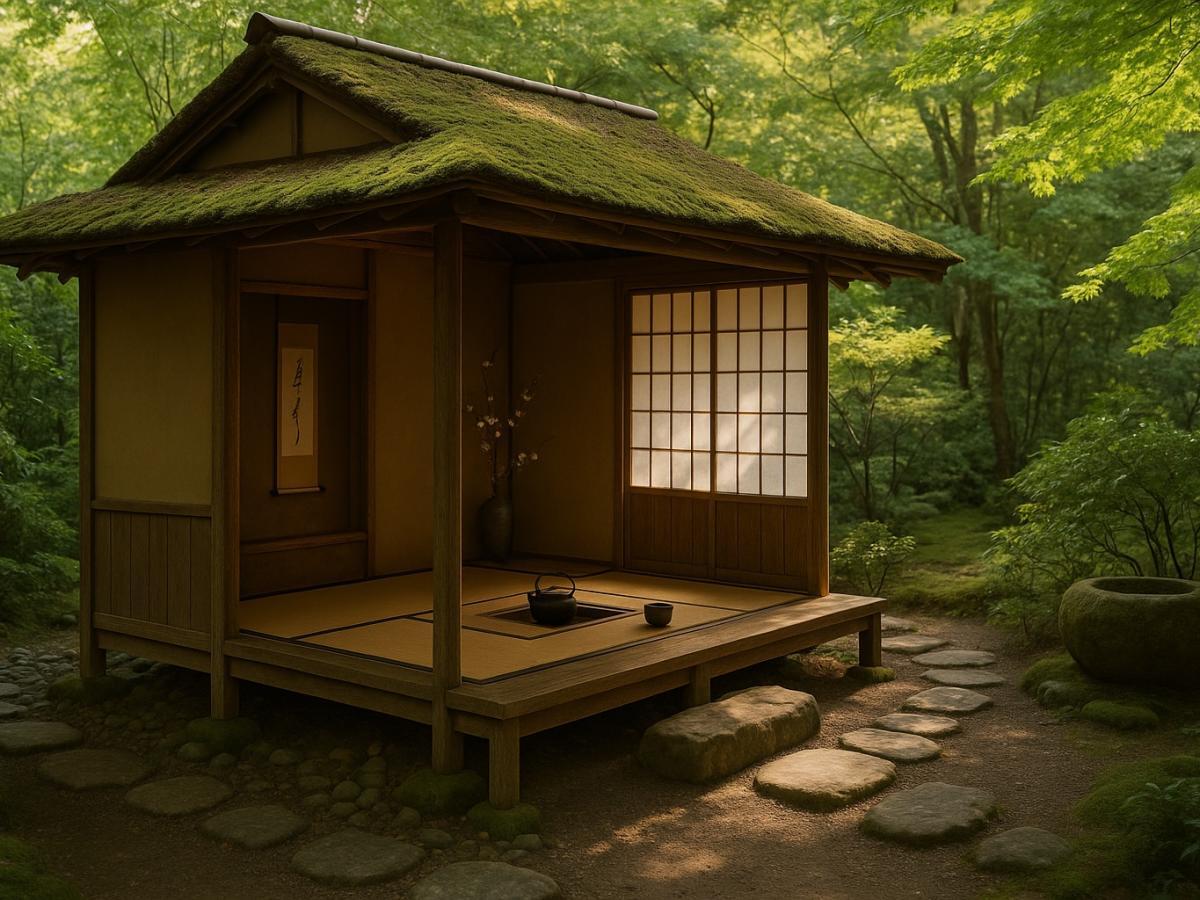
A moss-roofed Japanese tea house open to a quiet forest garden, with a tatami floor, an iron kettle and a stone path

There is perhaps no greater measure of a person's character than their capacity for humility.

Yet humility is frequently misunderstood. It is mistaken for weakness, meekness, submission or an expectation that we should make ourselves smaller so that others might feel bigger. But genuine humility asks no such thing of us. It does not require us to diminish our gifts, deny our achievements or surrender our voice.

Rather, humility asks something much more profound: that we see ourselves honestly.

It is the ability to recognise our own worth without needing to establish our superiority over another. To acknowledge our knowledge while remaining open to what we do not know. To exercise authority without becoming intoxicated by it. And to recognise that, however extraordinary our individual capacities might be, we are not the sole authors of the world in which we live.

Humility begins where the illusion of our own omnipotence ends.

The relationship between humility and ego

To understand humility, we must first examine the ego.

Ego is not inherently bad. It is part of our psychological architecture, helping us establish identity, boundaries, agency and a sense of self. We need a healthy sense of self to navigate the world, make decisions and take responsibility for our lives.

The difficulty arises when the ego ceases to serve the person and the person begins to serve the ego.

When our identity becomes dependent upon being right, being admired, being powerful, being wealthy or being recognised as superior, we become increasingly invested in protecting an image of ourselves rather than cultivating the substance of who we are.

We stop listening because we believe we already know. We stop learning because we believe we have already arrived. We stop seeing others as equals because we have begun to measure their worth against our own.

This is the architecture of arrogance.

Arrogance is not necessarily loud. It can be beautifully dressed, intellectually sophisticated, spiritually articulate and socially influential. It can occupy positions of authority and even disguise itself as benevolence.

A person can speak endlessly about love, wisdom and enlightenment while remaining incapable of accepting criticism, acknowledging an error or taking responsibility for the harm they cause.

This is why humility and integrity are so closely connected.

Humility is the foundation of integrity

Integrity is the alignment between what we believe, what we say and how we behave.

It is what remains of our character when there is nobody watching, nobody applauding and nothing to be gained from doing the right thing.

Humility makes integrity possible because it allows us to examine ourselves without the constant interference of self-justification.

A humble person can say, I was wrong.

They can apologise without feeling diminished. They can acknowledge another person's wisdom without feeling threatened. They can change their position when presented with better evidence. They can admit that they do not have all the answers.

These are not signs of weakness. They are signs of an integrated human being.

When protecting our reputation becomes more important than telling the truth, integrity begins to fracture. When maintaining our authority becomes more important than listening, our capacity to lead becomes compromised.

Humility allows us to return to truth, even when the truth requires us to confront something uncomfortable within ourselves.

The question of power

There is another dimension to humility that deserves our attention.

It concerns our understanding of power itself.

Are we the ultimate source of our own power, or are we participating in something greater than ourselves?

There is a fundamental difference between the person who believes they are the ultimate authority over their own existence and the person who understands themselves to be participating in something greater.

The first may see the world primarily through the lens of personal achievement, individual will and self-determination. Their success becomes evidence of their own superiority. Their authority becomes something they believe they are entitled to exercise.

The second understands that human beings are not entirely self-created.

Our lives are made possible through relationships, ecosystems, generations of knowledge, the generosity of others and forces of nature that existed long before we arrived.

For those who believe in a higher power, this understanding extends into the spiritual realm. We are not the ultimate source of life. We are participants in it, custodians of it and, perhaps, servants of something sacred.

This does not diminish human agency. It places our agency within a larger framework of responsibility.

Power becomes stewardship rather than ownership.

Leadership becomes service rather than domination.

Knowledge becomes an invitation to greater understanding rather than a weapon of superiority.

Success becomes something for which we can be grateful rather than something through which we establish our superiority over others.

The distinction is between possessing power and understanding the responsibility of being entrusted with it.

The meek shall inherit the earth: Yeshua's radical understanding of power

Perhaps nowhere is the relationship between humility and power more beautifully expressed than in the words of Yeshua:

"Blessed are the meek, for they will inherit the earth." — Matthew 5:5 (Berean Standard Bible).

It is a remarkable statement because it turns our conventional understanding of power upside down.

The world often rewards those who are most assertive, most competitive, most forceful and most determined to impose their will upon others. We have come to associate power with dominance, wealth, influence, authority and the ability to control outcomes.

But Yeshua offers an entirely different vision.

The meek are not necessarily those without strength. They are those who possess strength without needing to dominate. They can exercise authority without oppression, stand in their convictions without arrogance and respond to injustice without becoming consumed by the very forces they seek to overcome.

Meekness is strength governed by wisdom, compassion and self-restraint.

There is also something deeply significant about the promise that the meek will inherit the earth. It suggests a different relationship between humanity and creation altogether.

Perhaps those who understand that the earth is not theirs to conquer, exploit or possess without responsibility are the very people best equipped to inherit its future.

To inherit something is not simply to acquire it. It is to receive something of value and accept responsibility for its care.

In this sense, the inheritance Yeshua speaks of is not merely about material possession or worldly success. It invites us to imagine a different civilisation, one in which power is exercised through service, leadership through integrity, and prosperity through right relationship with all living things.

The meek do not need to conquer the earth to belong to it.

They understand that they are already part of something sacred.

And perhaps this is the profound connection between humility and the New Earth: the future cannot be built upon the same arrogance, domination and separation that have brought so much destruction to the world.

It must be built upon a different understanding of power.

Not power over creation, but power in service of life.

Are we the authors of our reality, or participants in it?

This brings us to an even bigger question.

If we acknowledge that we are not the sole authors of our world, are we beginning to accept a universe in which we participate in an ongoing process of interaction, possibility and response?

Modern physics, particularly quantum mechanics, has revealed that the universe operates in ways that challenge some of our most deeply held assumptions about physical reality.

At the quantum scale, particles and systems behave in ways that cannot always be described through the familiar mechanics of the everyday world. Superposition, entanglement and probabilistic outcomes have fundamentally expanded our understanding of nature.

There is a popular interpretation that human consciousness creates physical reality through observation, although this is not an established scientific conclusion. Quantum measurement does not require a conscious human observer, and the relationship between quantum mechanics and consciousness remains a subject of philosophical discussion.

Nevertheless, there is a question here that extends beyond physics.

What if we have misunderstood our relationship with existence?

What if we are not isolated individuals imposing our will upon a passive universe, but conscious participants in a complex and interconnected reality?

We do not create the sun, but we respond to its light.

We do not create the ocean, but we participate in its rhythms.

We do not create another person's consciousness, but our presence influences their experience, just as theirs influences ours.

Our lives emerge through an ongoing relationship between intention, action, environment, other people and circumstances beyond our control.

Perhaps the more useful question is not whether we create reality through consciousness, but how consciously we participate in the reality we inhabit.

What does it mean to be in alignment?

If we are participants in a greater unfolding, what does it mean to live in alignment?

I would suggest that alignment is not about getting the universe to do what we want. It is about bringing ourselves into right relationship with the reality in which we participate.

There are several dimensions to this.

Alignment with ourselves: Our thoughts, words, values and actions become coherent. We are not living in contradiction with what we know to be true.

Alignment with one another: We recognise that other people are sovereign beings with their own experiences, dignity and agency. We seek relationships based on mutual respect rather than domination.

Alignment with nature: We recognise that we are part of a living ecological system. We learn to work with natural rhythms rather than assuming everything exists for our exploitation.

Alignment with the Divine: We recognise that our individual will is not the highest authority. We become receptive to wisdom, conscience, love and a source of life greater than ourselves.

This is where humility becomes essential.

The ego asks: How can I make reality conform to my intentions?

Alignment asks: How can I bring my intentions into harmony with what is true, life-giving and good?

One is an exercise in control. The other is an exercise in discernment.

Alignment does not mean passivity or surrendering our ability to make choices. It means understanding that our choices have consequences within a much larger web of relationships.

We can have extraordinary intentions and still be mistaken. We can believe we are doing something good and inadvertently cause harm. We can desire an outcome so intensely that we become blind to what is actually unfolding.

Alignment requires humility. It requires us to listen, observe, question, learn and sometimes change direction.

The wisdom of Yeshua: Not my will, but Yours

There is a beautiful scriptural expression of this principle in the words of Yeshua:

"Yet not My will, but Yours be done." — Luke 22:42 (Berean Standard Bible).

This is particularly significant in the context of our exploration.

It is not an expression of powerlessness. It is an expression of conscious surrender.

Yeshua is articulating the distinction between personal will and Divine will.

The individual does not disappear. The individual becomes aligned with something greater than the individual self.

In John 15:5, Yeshua offers another profound metaphor:

"Apart from Me you can do nothing."

The image of the vine and its branches presents life as something sustained through relationship, not isolated self-sufficiency.

There is a profound humility in that image.

It challenges the assumption that we are entirely self-sufficient beings, capable of understanding and controlling everything through individual will.

Instead, it invites us into a relationship with the source of life itself.

The danger of spiritual arrogance

There is, however, a subtle trap worth acknowledging.

Even humility can become something the ego claims as its own.

We can become proud of being humble. We can use spiritual knowledge to establish a hierarchy between ourselves and those we perceive as less awakened. We can become attached to being seen as compassionate, enlightened or divinely favoured.

This is spiritual arrogance, and perhaps it is among the most difficult forms of ego to recognise because it can wear the language of virtue.

Genuine humility does not require us to announce our spiritual standing.

It is expressed in how we treat people, how we respond to adversity, how we exercise power and how willing we are to recognise the humanity of those with whom we disagree.

Belief in a higher power does not automatically make someone humble or ethical. Religious authority can become just as ego-driven as political or commercial authority.

The test is always in the conduct.

Humility is not demonstrated by what we profess to believe, but by how we exercise the power we have.

Returning to right relationship

Perhaps the most important thing humility offers us is the possibility of right relationship.

Right relationship with ourselves, because we can acknowledge both our gifts and our limitations.

Right relationship with one another, because we no longer need to establish superiority in order to feel worthy.

Right relationship with the natural world, because we recognise that we are participants in an extraordinary living system, not its unquestionable masters.

And right relationship with the Divine, because we understand that there are dimensions of existence beyond the limits of our individual knowledge and control.

What if the purpose of human consciousness is not to dominate creation, but to participate in it with increasing awareness, responsibility and love?

What if the home we build, the garden we cultivate, the food we prepare, the materials we choose, the sounds we introduce into our environment and the way we treat another human being are all expressions of that participation?

Our inner landscape influences our outer world. Our outer world, in turn, influences our inner landscape.

This is a living relationship.

The architecture of alignment

Perhaps humility is the beginning of alignment because it is the moment we stop assuming that we are the centre of creation.

We begin to understand that we are neither separate from life nor its ultimate authority. We are participants in an extraordinary unfolding, entrusted with consciousness, choice and the capacity to influence the world through how we live.

Alignment is the practice of bringing our individual will into right relationship with the greater order of life.

It is where integrity meets intention, where knowledge meets wisdom, where power meets responsibility and where the human being begins to understand that creation is not something to conquer, but something sacred to participate in.

We do not need to be the authors of everything to become conscious co-creators of something beautiful.

And perhaps this is the greatest paradox of humility: the less we need to make ourselves important, the more room we create for something truly important to emerge through us.

The questions we must continue to ask

If humility is the beginning of wisdom, what does it mean to live humbly without diminishing ourselves?

Is humility intrinsically connected to integrity, and can we truly possess one without the other?

What role does the ego play in our understanding of power, identity and authority?

Is there a fundamental difference between those who believe they are the ultimate source of their own power and those who recognise a higher power or source of life?

If we are not the sole authors of our world, what is our relationship with the universe in which we participate?

What can quantum physics genuinely teach us about interconnectedness, possibility and the nature of reality, and where must we distinguish scientific evidence from spiritual interpretation?

What does it mean to be in alignment with ourselves, one another, nature and the Divine?

And, perhaps the most important question of all:

If alignment is about bringing our individual will into right relationship with Divine will, how do we distinguish between the voice of our ego, the voice of our conscience and the voice of the Divine?

Perhaps that is where the real work of becoming human begins.

Lady Saffire BoVardia

← Back to The Journal